
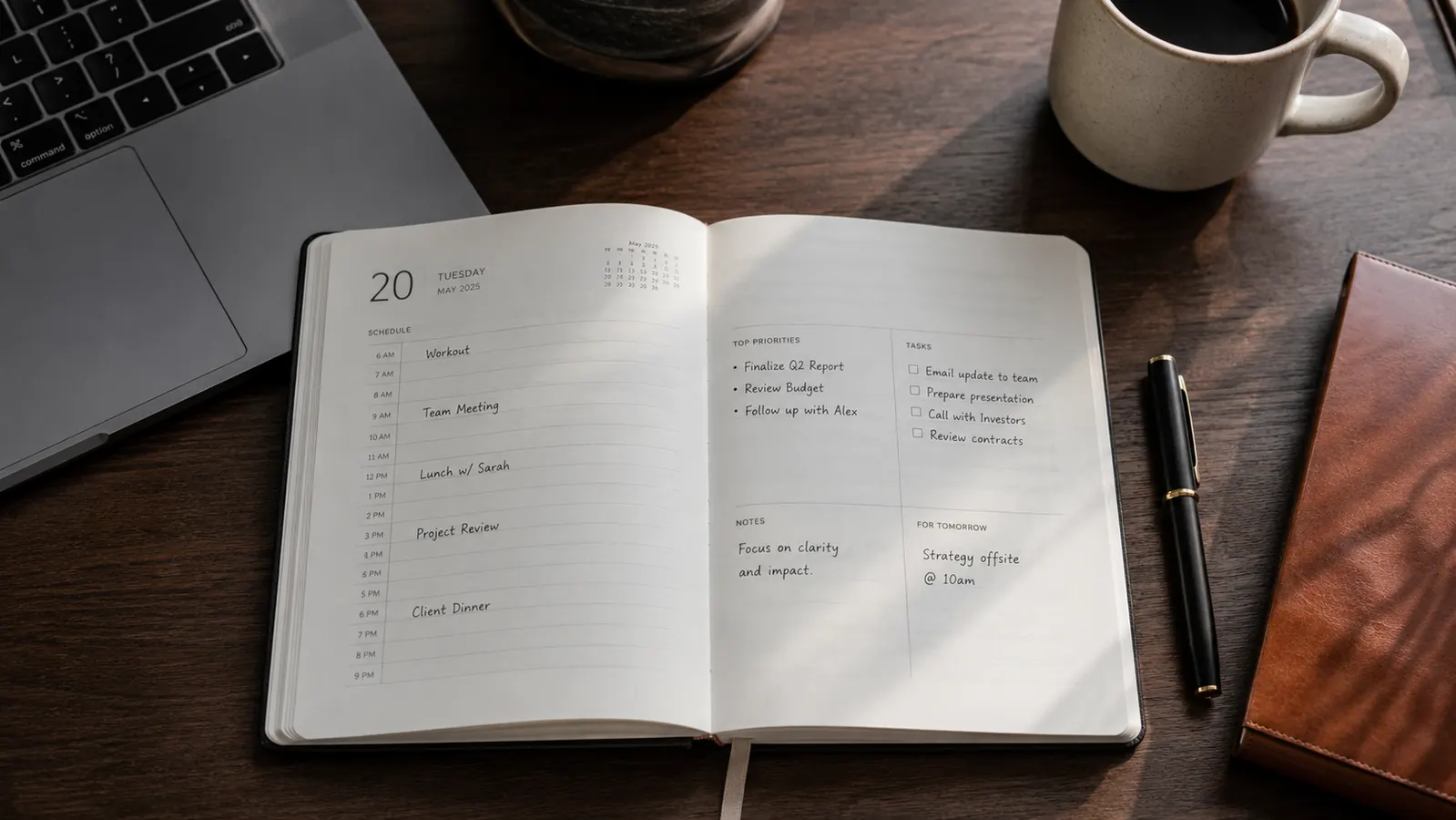
If you are trying to choose between the Anecdote Daily Planner and the Full Focus Planner, here is the short answer: the Anecdote is the better pick for most entrepreneurs. It costs less, ships the same day from Amazon, covers 26 weeks of daily structured planning, and does not require a quarterly ritual to feel useful. The Full Focus Planner from Michael Hyatt's company is a solid product, but it is built around a specific productivity system that takes weeks to internalize. If you already live inside that system, it may suit you. If you just want a clean, well-designed daily planner that helps you show up focused every morning, the Anecdote wins on almost every point that matters.
I compared both over four months of running a service business where the morning planning block is the first real meeting of the day. Here is exactly how they stack up.
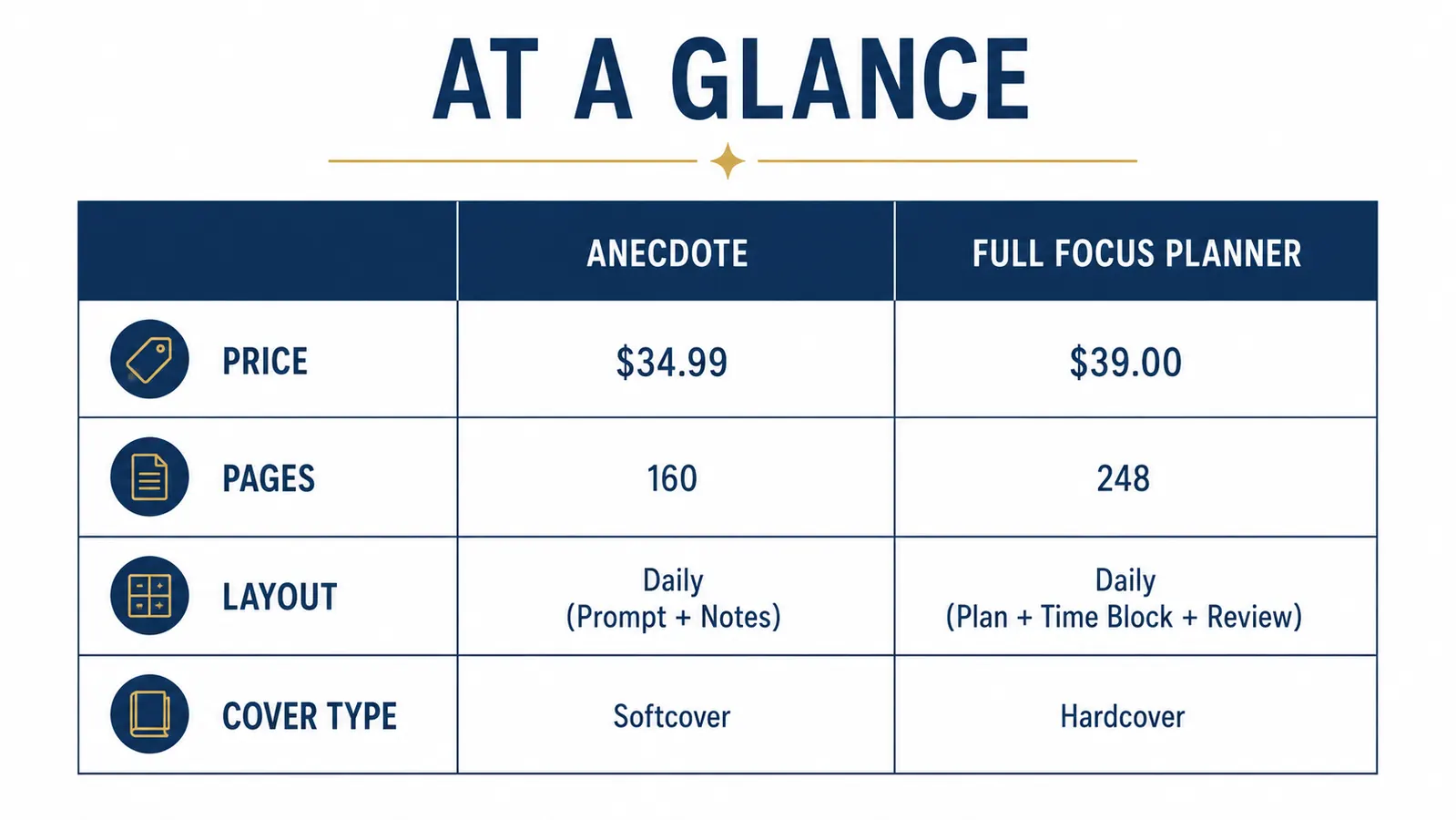
| Spec | Anecdote Daily Planner | Full Focus Planner |
|---|---|---|
| Price | Budget-friendly (Amazon) | Check today's price on Amazon (brand site) |
| Duration covered | 26 weeks undated, start anytime | 90 days with fixed quarterly dates |
| Daily page structure | Goals, top 3 priorities, schedule blocks, gratitude | Big 3 tasks, daily reflection, hourly schedule, gratitude |
| Includes calendar | Yes, 2026-2027 calendar printed inside | No calendar; relies on external system |
| Paper weight | 100 gsm ivory, fountain-pen friendly | 80 gsm white, standard ballpoint quality |
| Cover and binding | Thick laminate hardcover, lay-flat binding | Faux leather softcover, does not lay fully flat |
| Weekly overview section | Weekly goals and intentions spread | Weekly preview and review pages |
| Goal-setting framework | Simple priority framing, no proprietary system required | Tied to Michael Hyatt's Full Focus System (requires onboarding) |
| Availability | Ships from Amazon Prime, same or next day | Ships from brand website, 5-7 days standard |
Where the Anecdote Daily Planner Wins
The biggest practical advantage of the Anecdote is that you can start it today. It is undated, covers 26 weeks from whenever you open it, and includes a printed 2026-2027 annual calendar so you have context for quarterly and annual goals without leaving the notebook. You do not need to buy a new one in January or figure out what to do with half-used pages after a quarter ends. That flexibility is underrated for founders whose schedules do not follow neat three-month cycles.
The daily page layout earns its space. Each page gives you a goal for the day, three priorities, a time-blocked schedule column, a gratitude line, and a notes area. That structure takes about four minutes to fill out in the morning and genuinely changes the quality of your first hour. The paper holds up to felt-tip pens without bleed-through, and the lay-flat binding means you are not fighting the notebook to stay open while you write. At its price point on Amazon, there is almost no comparable planner that ships this quickly and delivers this level of production quality.
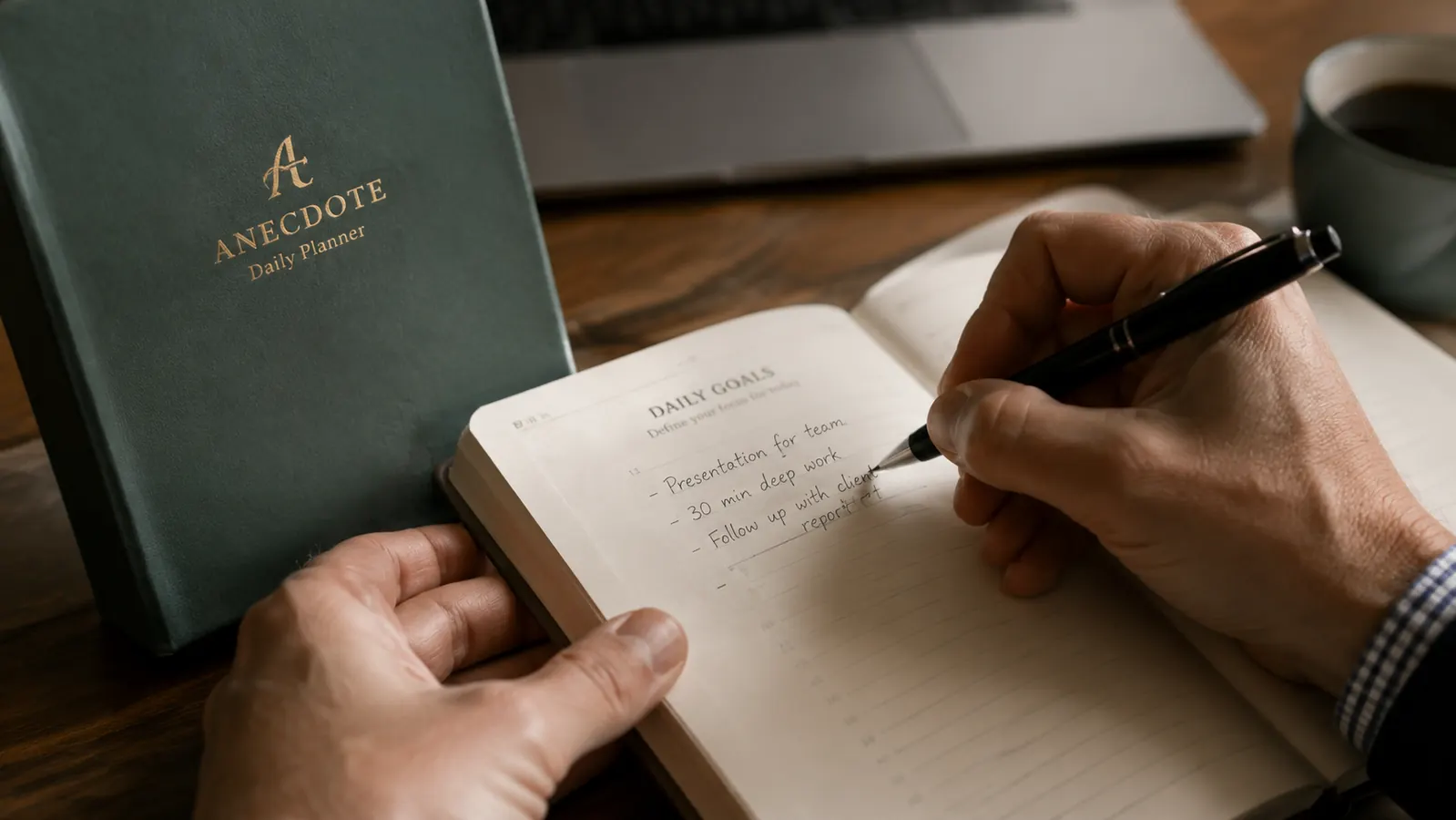
The Anecdote also includes a weekly goals and intentions spread before each seven-day block. This matters more than it sounds. Having a one-page view of your week forces you to translate quarterly ambitions into concrete weekly commitments, without needing a separate notebook or a two-hour quarterly planning retreat to get the benefit.
Where the Full Focus Planner Wins
The Full Focus Planner is a better product for one specific buyer: someone who has read Michael Hyatt's Full Focus System, uses it actively, and wants a planner designed as the physical companion to that methodology. The daily page prompts are calibrated to that system's language, its reflection rhythms, and its quarterly goal-setting cadence. If that is your operating system, the planner feels cohesive in a way no generic planner can replicate.
The hourly schedule blocks on the Full Focus daily page are also more granular than the Anecdote's time-blocking column, which suits people who manage their calendar in fifteen-minute increments. The reflection prompts at the bottom of each day, and the end-of-week review structure, are genuinely useful if you commit to completing them. The issue is that most busy founders do not. And when you skip the reflections, you have paid significantly more for a slightly lower-quality physical product.
Stop paying premium prices for a planner that ships in a week. The Anecdote costs less, starts today, and holds up to daily use.
The Anecdote Daily Planner is available on Amazon with Prime shipping. Rated 4.4 stars from over 5,600 verified buyers, it is the pragmatic choice for founders who want structure without a system to learn.
Amazon Check Today's Price on Amazon →Daily Page Layouts: A Side-by-Side Look
Both planners use a one-page-per-day format, which is the right call for any entrepreneur who is making consequential decisions daily. The Anecdote's layout reads top to bottom in a logical sequence: the day's goal sits at the top, then three priorities, then a time-block column that runs from 6 a.m. to 9 p.m. in hourly rows, with a notes area and gratitude line at the bottom. The Full Focus layout moves the Big 3 tasks to the center of the page and splits the daily reflection prompts across two columns, which some people find harder to scan quickly during a busy morning.
The Anecdote's schedule column is slightly narrower than the Full Focus hourly grid, which means it works better for time-blocking major work sessions than logging every fifteen-minute increment. If your day involves ten or more distinct calendar slots, the Full Focus grid is technically more accommodating. For most founders running three to five deep-work blocks per day with a few calls mixed in, the Anecdote is plenty.
The Anecdote costs less than half what the Full Focus runs, ships from Amazon today, and does not require a quarterly retreat to get value out of it. That is not a small difference.
Paper Quality and Physical Build
The Anecdote uses 100 gsm ivory paper, which is noticeably thicker and more pleasant to write on than the 80 gsm white stock in the Full Focus. Ink from a Pilot G2 or any felt-tip pen stays where you put it. There is no ghosting, and bleed-through is minimal even with wetter inks. The laminated hardcover keeps the notebook flat when it sits on a desk, and the lay-flat binding means you are never pressing down the pages while you write. These are not small details when you are using a notebook for thirty minutes every working day.
The Full Focus has a faux leather softcover that looks professional on a desk but does not lay fully flat, particularly in the first few weeks before the binding softens. For a planner at its price point, the physical build should not give you any friction. The Anecdote, at a lower price, gives you a better physical experience. That is an unusual outcome and worth noting plainly.

Who Should Buy Which
Buy the Anecdote Daily Planner if you want a well-built, daily-structure planner that starts on any date, covers half a year, includes a calendar, uses excellent paper, and is budget-friendly with Prime delivery. That covers most founders, operators, and professionals who plan their days by hand and do not have time to onboard a new productivity system. It is the right call for the majority of people comparing these two.
Buy the Full Focus Planner only if you are an active practitioner of Michael Hyatt's Full Focus System and you want the physical planner designed around that specific methodology. If you have not read the book, not completed a full quarterly review cycle in that system, and are just looking for a high-quality daily planner, you will likely underuse the Full Focus and feel you overpaid. The Anecdote is honest about what it is and delivers on it completely. For a deeper look at how the Anecdote performs over a full six-month run, see the long-term review. For a more critical look at its drawbacks, the honest review covers what most planners would not admit.
The Anecdote Daily Planner is the right call. Budget-friendly, starts today, 26 weeks of structured daily pages.
With 5,678 reviews and a 4.4-star rating on Amazon, it has been tested by real founders and professionals. The price, the paper, and the layout all hold up. There is no reason to pay more for less.
Amazon Check Today's Price on Amazon →