
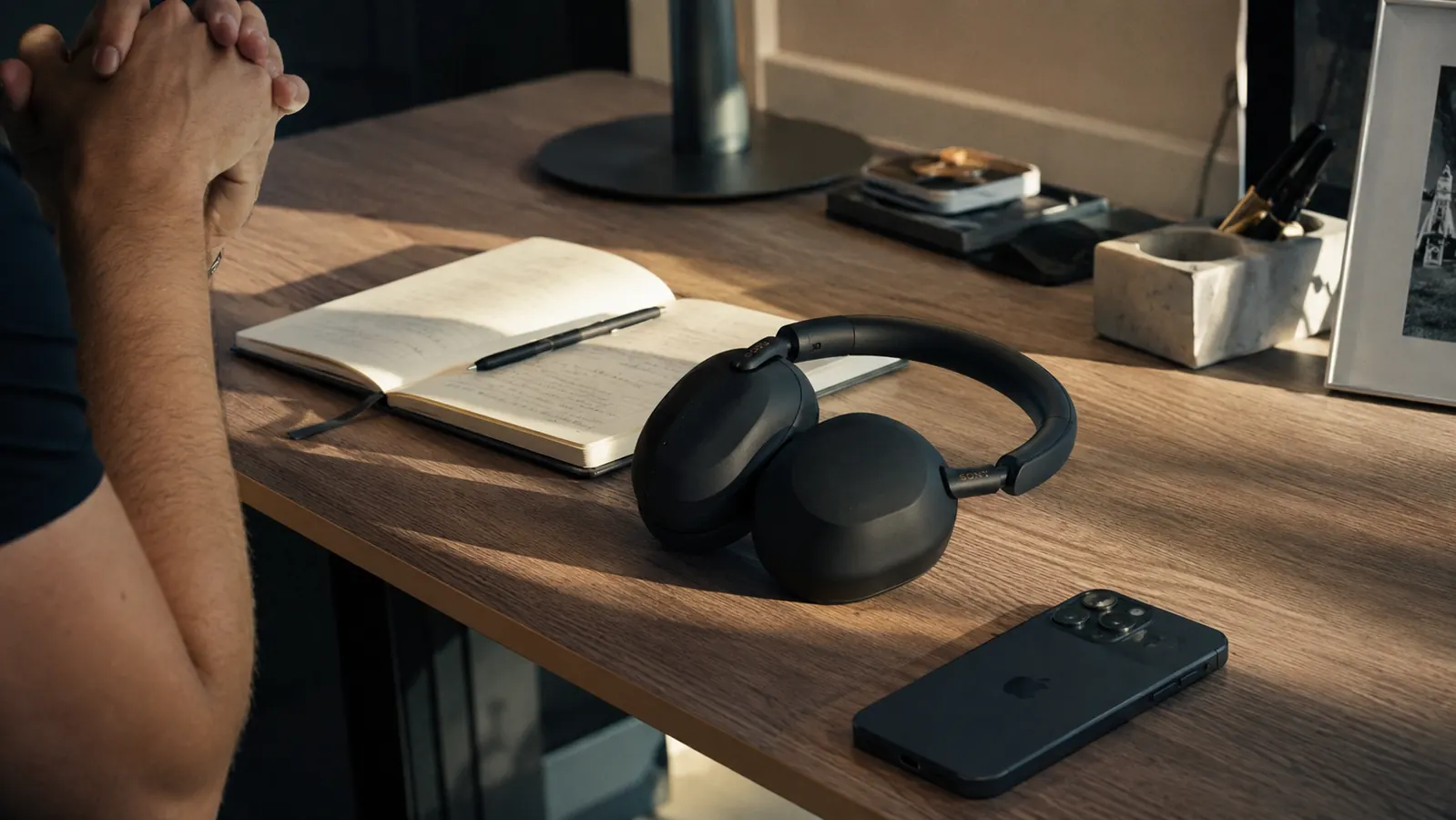
Most reviews of the Sony WH-1000XM5 read the same way. They tell you the noise cancellation is exceptional. They note the 30-hour battery. They mention the eight microphones and say calls sound clear. Then they close with a buy recommendation and move on. I want to do something more useful for you. I want to tell you the four things those reviews skip, because if any of them apply to your situation, they might change your decision.
I have been using the WH-1000XM5 as a working tool in my business for a significant stretch of time now. My name is Marcus. I run a consulting practice and a small product company out of a converted guest room. I take sales calls, run client strategy sessions, do long writing blocks, and occasionally sit on hold with vendors for 40 minutes at a stretch. These headphones see real professional workload, not weekend listening sessions.
The Quick Verdict
The ANC is the real deal and the mic quality holds up for serious client calls. But the Sony app is genuinely glitchy, the case is bigger than it should be, and if you work in truly loud shared spaces, the mic pickup has one specific weakness that matters. Worth buying for most founders. Not a perfect product.
Amazon Check Today's Price →If background noise is killing your focus, this is the headphone that actually fixes it.
Sony WH-1000XM5 has 19,641 Amazon reviews and a 4.2-star average. Auto NC Optimizer, 30-hour battery, 8-mic call system. Check today's price before deciding.
Amazon Check Today's Price on Amazon →What Nobody Tells You: Four Honest Observations
I want to lead with the things that surprised me rather than bury them at the end. These are not dealbreakers for most people, but they are real, and you deserve to know about them upfront.
First: the Sony Headphones Connect app is required to unlock several of the features that make the WH-1000XM5 worth the price. The Auto NC Optimizer, the adaptive sound controls, the Speak-to-Chat sensitivity settings, all live in that app. The app works most of the time. But it has a documented pattern of losing device pairing after iOS and macOS updates, and customer reviews reflect that clearly. I have had it disconnect my saved settings twice. The fix both times was to delete the pairing and re-pair from scratch. It took about four minutes and was annoying. If you run a tight schedule and cannot afford a random 10-minute tech headache the morning of an important call, know that this is a real, recurring risk with no permanent fix yet from Sony.
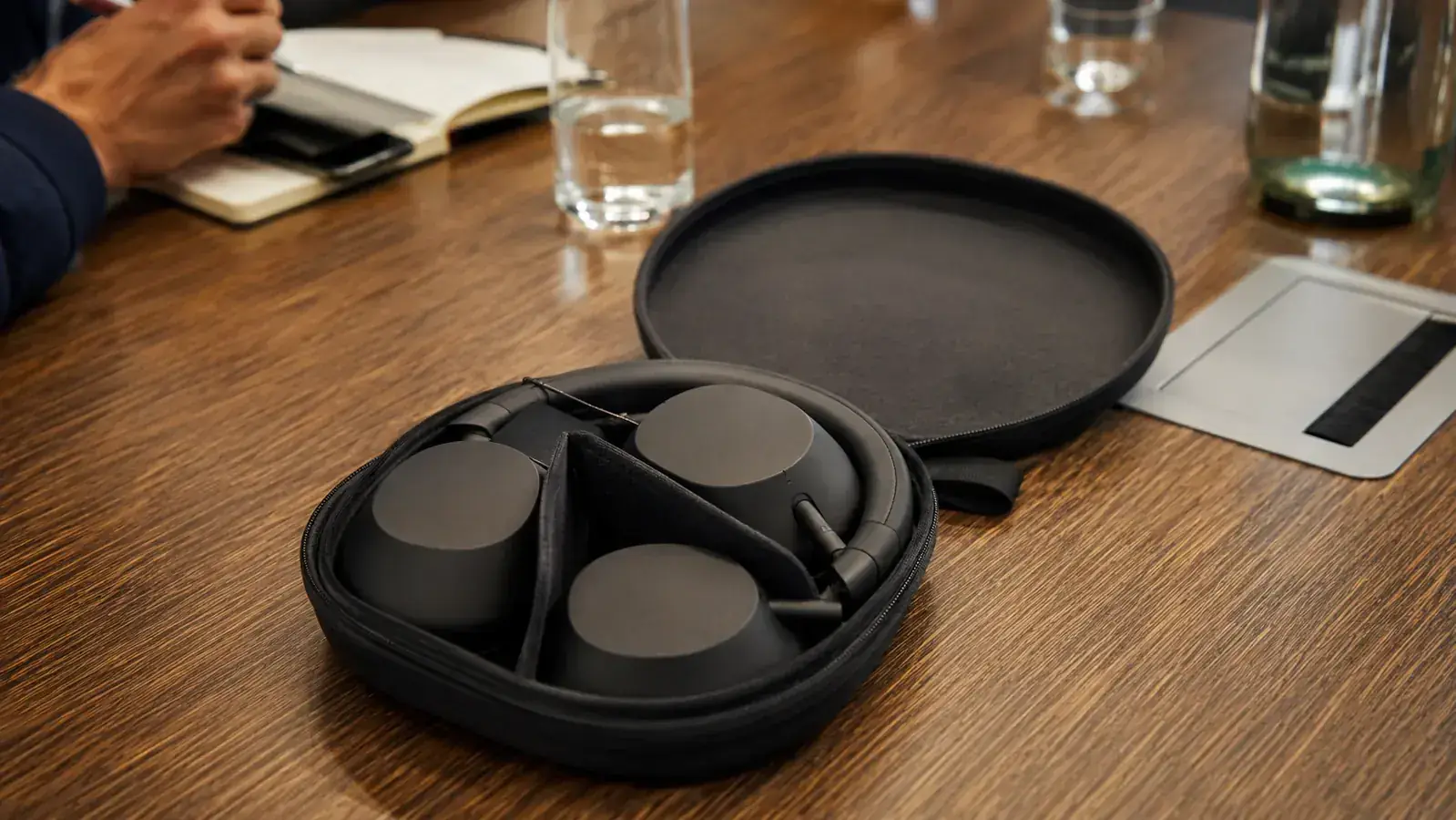
Second: the WH-1000XM5 does not fold flat. The previous generation, the XM4, folded into a compact position that made it dramatically smaller in a bag. Sony redesigned the frame for the XM5 and removed the fold. The carry case that comes in the box is a soft zipper pouch that fits the headphones in their open position. That case is noticeably larger than what the XM4 needed. If you are packing light for a two-day trip and every inch of bag space is accounted for, this matters. I keep mine in the front pocket of a 26-liter backpack and it fits, but barely.
Third: multipoint Bluetooth, the ability to connect to two devices at once, is listed as a feature of the WH-1000XM5. What the spec sheet does not clarify is that multipoint connection can cause audio codec negotiation to drop from LDAC (Sony's high-quality codec) down to standard SBC when two devices are active simultaneously. If you care about audio fidelity and you are connected to both your phone and your laptop at the same time, you may not be getting the best audio quality the headphones can deliver. For voice calls this is irrelevant. For music, if you care about the difference, connect to one device at a time.
Fourth: the microphone pickup in genuinely loud shared spaces, think an open co-working floor with 30 people, or a busy airport gate, is good but not magic. It handles my home office background noise extremely well. I have had a call go sideways in a busy airport terminal where the person on the other end asked me to repeat myself twice. That had never happened in my home office. The WH-1000XM5 mic system manages steady background noise very effectively. Loud, chaotic, multi-directional noise with sudden bursts is harder for it. Know the difference before you rely on this as your sole call setup when you are traveling.
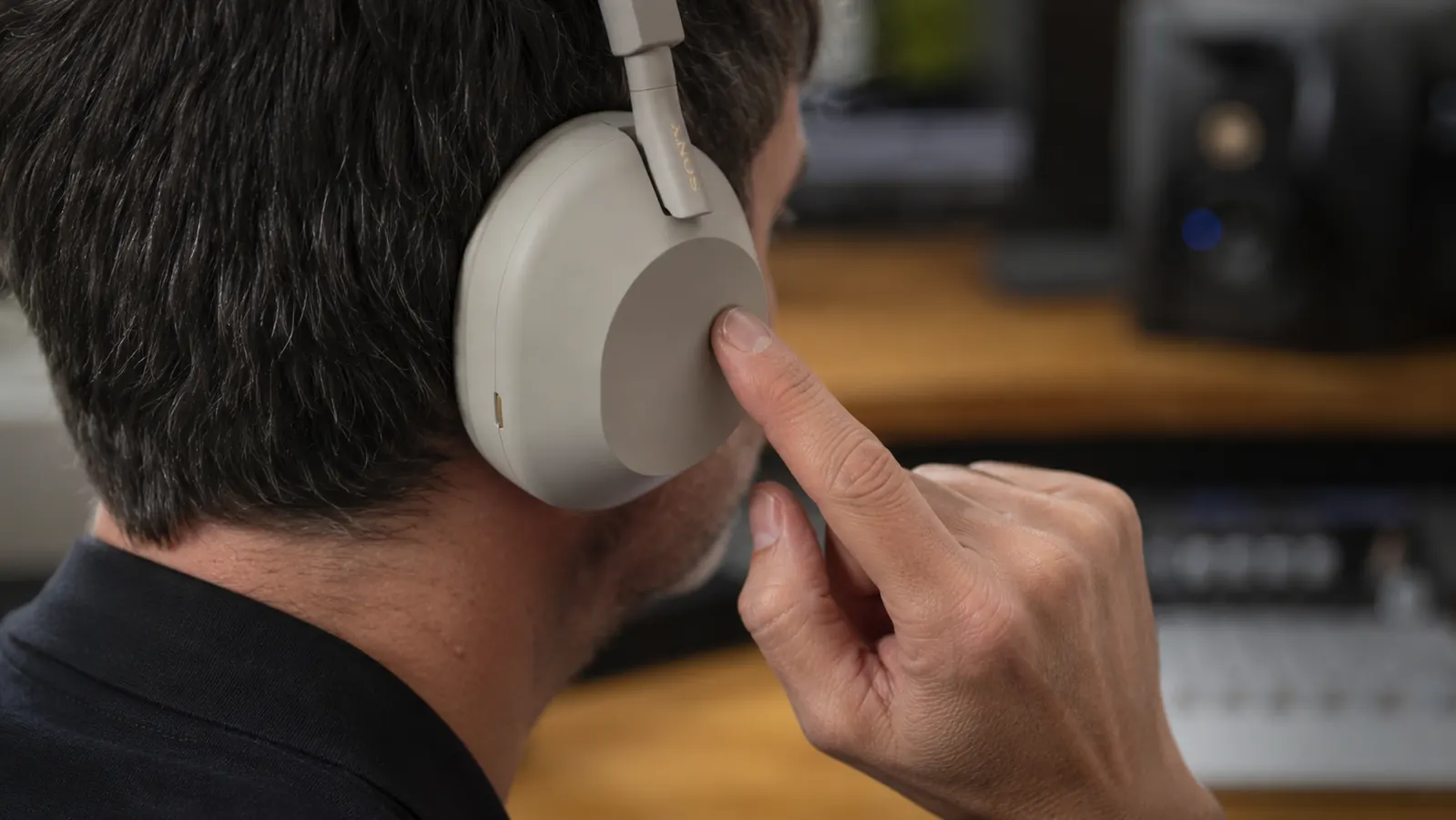
Where It Is Genuinely Excellent
Now that the caveats are on the table, let me be equally direct about what the WH-1000XM5 does at a level I have not found in any other headphone I have bought or tested.
The ANC on consistent, predictable noise sources is not incrementally better than the competition. It is categorically better. I have a landscaping crew that works my street every other Wednesday morning. Before the WH-1000XM5, I would schedule those mornings for administrative tasks that did not require deep thinking, because the sound was too distracting for strategy work. Now I do not think about it. The crew shows up, I put the headphones on, and the sound reduces to a texture I can ignore. That is a real change in how I schedule my own week, and over a year that adds up.
The sound quality for a wireless headphone is notably good. It is not audiophile territory. If you spend your evenings listening critically to high-resolution audio files, you will find the sound signature pleasant but not revelatory. But for a working professional who wants accurate, fatigue-free audio during calls, background music during focus blocks, and podcast playback on a run, the WH-1000XM5 sounds excellent. The midrange is clear and forward, which is exactly what you want for voice-heavy use. Bass is present without being overemphasized. Treble is smooth, not harsh.
Call quality as heard by the other person is the metric that matters most for a client-facing business, and this is where the eight-microphone array earns its keep. I did a deliberate test with my business partner, Delia, who agreed to give me honest feedback over a 20-minute call while I was in my office with my HVAC running and a loud box fan on the desk. She heard me clearly throughout, reported no background noise awareness, and said I sounded, and I am quoting her directly here, like I was in a recording studio. That result consistently repeats across my regular calls.
My business partner Delia said I sounded like I was in a recording studio. That was in my home office with an HVAC running and a box fan on the desk. That is what a real mic system looks like.
Battery, Build, and Durability After Real Use
The 30-hour battery claim is close to accurate in daily use. My charging pattern works out to roughly once every three days based on three to four hours of use per workday. I have never needed to charge mid-day, and I have gotten to the point where charging the headphones is a background habit the same way charging a phone is. The quick-charge feature, which gives usable battery from a short charge, has saved me at least twice when I forgot to charge overnight before an early morning client call.
Build quality is a mixed signal. The frame and earcup construction feel solid. The materials have a premium finish that holds up to daily handling without visible wear on the surfaces you touch most. The headband has some flex to it that I initially read as cheapness but over time I read as intentional engineering, it distributes pressure rather than concentrating it. The part that does feel underbuilt relative to the price is the carrying case. A soft zipper pouch at this price point is a choice I do not fully understand. The headphones survive it fine, but it feels like a place where Sony saved $3 and customers notice.
One durability note worth flagging: the USB-C port is the component I watch most carefully in any headphone, because port failure is the single most common reason wireless headphones end up in a drawer. After extended daily use, the WH-1000XM5 port still seats cables firmly with no wobble. That is a good sign but not a guarantee. If you are rough with cables, use the quick-charge feature only when necessary and store the headphones consistently with the port protected.
The Price Question: Is It Worth Paying More Than Budget Alternatives
This is the question I get asked most often by other founders when they see me wearing these. The honest answer is: it depends on what your time is worth and how often noise costs you work output.
There are capable noise-cancelling headphones available at a significantly lower price. The Anker Soundcore Q45, the Jabra Evolve2 55 for call-focused work, and older versions of Bose's QuietComfort line all offer functional ANC at a lower buy-in. For occasional use, a lighter schedule, or a professional whose calls are already conducted in a quiet dedicated office, one of those options may be entirely sufficient. I am not going to tell you that you must spend more to do real work.
What the WH-1000XM5 delivers that budget ANC headphones do not is the combination of class-leading ANC, genuinely good call mic quality, and 30-hour battery in a single package. If you are running three to five client calls a day, doing deep work in an environment you do not fully control, and traveling monthly, the premium is justified by the output. The WH-1000XM5 also has solid resale value compared to most consumer electronics, so if you try it and it does not fit your workflow, you lose less on resale than you would on most comparable purchases.
What I Liked
- ANC on steady-state noise sources is categorically better than competing headphones in this range
- Eight-microphone call system delivers recording-studio clarity in real home-office conditions
- Battery life of 30 hours holds up in daily use, reducing charging to a background habit
- Sound quality is accurate and fatigue-free across voice calls, music, and podcast playback
- Solid resale value relative to most consumer electronics if it does not fit your workflow
- Multipoint Bluetooth allows simultaneous connection to phone and laptop with easy switching
Where It Falls Short
- Sony Headphones Connect app has a recurring pattern of losing pairing after OS updates
- Non-folding design requires a larger carry case than the previous generation
- Multipoint connection can drop audio codec quality from LDAC to SBC when two devices are active
- Microphone pickup in chaotic, multi-directional loud spaces is good but not infallible
- Carrying case quality is soft-pouch only and feels underbuilt for the headphone's price
How It Compares to the Bose QuietComfort 45
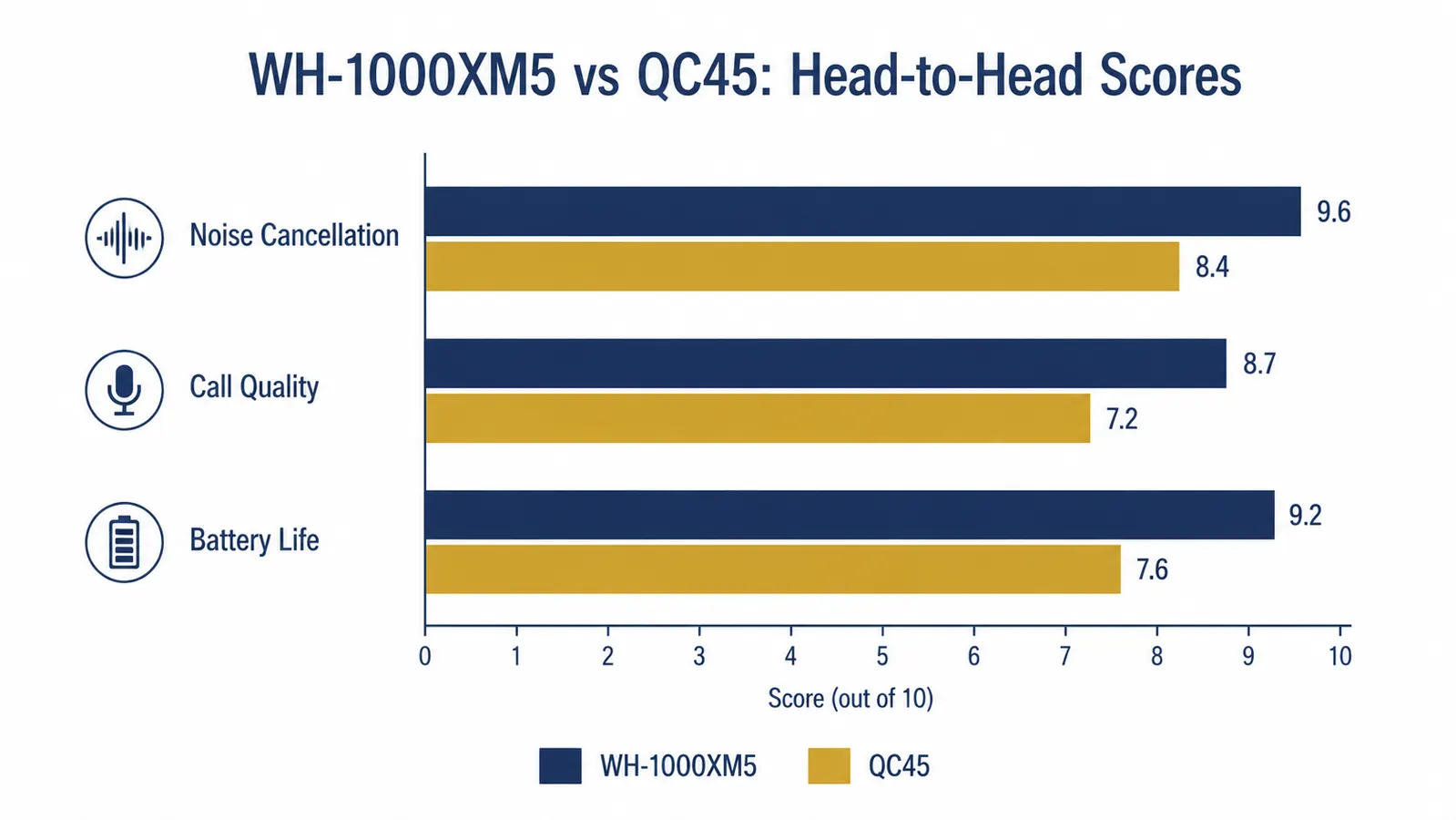
I ran the Bose QuietComfort 45 as my primary headphone before switching to the WH-1000XM5. The QC45 has meaningful advantages: it is lighter on the head, it folds flat for easier packing, and the ear cushions are softer on long sessions. If comfort over six-plus continuous hours is your primary constraint, the Bose is worth considering.
On noise cancellation, the Sony wins clearly. The WH-1000XM5 eliminates more of the frequency range that affects focus work. On call microphone quality, the Sony also has an edge, particularly in home environments with HVAC and ambient noise present. On battery, both are strong and the practical difference is minimal. For a full head-to-head breakdown across price, build, and use case, see our separate comparison piece at the link below.
Who Should Buy the WH-1000XM5
Buy this headphone if you are a founder or professional who works primarily from a home office or hybrid setup, takes three or more client or team calls daily, and operates in an environment where background noise is unpredictable or ongoing. The ANC will change the quality of your workdays in a way that is hard to describe until you have experienced it. The call mic will make your clients hear you the way you want to be heard. The battery will stay out of the way.
Buy it if you travel for business and need a single headphone that handles calls in transit, focus work in airports, and long flights without failing or requiring a charge mid-trip.
Who Should Skip It
Skip it if the Sony app glitches will genuinely disrupt your workflow and you have no patience for occasional re-pairing. A Jabra business headset may be a better fit if rock-solid Bluetooth reliability is your single non-negotiable. Skip it if you already work in a quiet, controlled space and ANC is not solving a real problem for you. Skip it if packing efficiency is critical and the non-folding case will cause real friction in a tight travel setup. And skip it if your budget does not stretch to the current price point without strain. A capable budget ANC headphone does exist and it will handle 80 percent of what this handles at a fraction of the cost.
For founders and professionals in the target scenario, the WH-1000XM5 is not hype. It is a tool that earns its place in a professional kit the same way a good monitor or a fast solid-state drive does. You stop thinking about it and start doing better work. That is what you are actually buying. If that outcome is worth the current price, this is your headphone. For a deeper look at how it stacks up against the Bose alternative, check our comparison guide. For a broader look at why noise-cancelling headphones matter for entrepreneurial focus, see our article on using them to build real deep-work blocks.
Stop letting background noise be a variable in your client calls and focus blocks.
The WH-1000XM5 has 19,641 Amazon reviews, a 4.2-star average, and the ANC to back up its reputation. Check today's price and see current availability.
Amazon Check Today's Price on Amazon →