
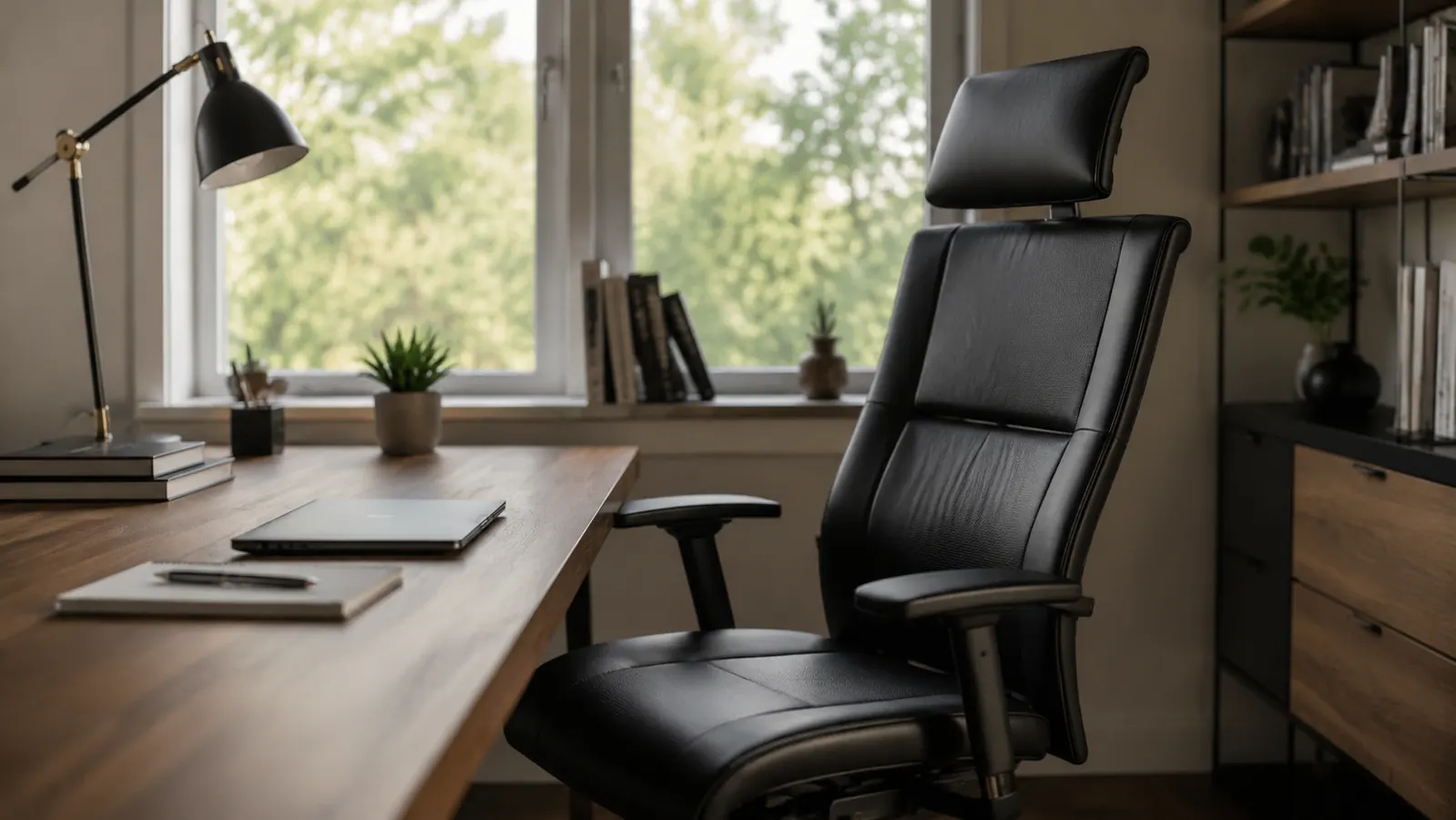
By March of this year, I had logged somewhere around 1,400 hours in a budget mesh chair I bought off a warehouse clearance rack three years earlier. My lower back knew it. My afternoon energy levels knew it. My chiropractor, who started seeing me monthly instead of quarterly, definitely knew it. So I bought the X XISHE Ergonomic Office Chair, the one sitting at the top of the ergonomic results on Amazon with a 4.5-star rating and over 3,000 reviews, and I committed to running a real test. Eight hours a day. Ninety days. No switching back.
This is not a weekend-impressions review. This is what happened to my back, my focus, and my opinion of this chair over a full business quarter. I am Marcus, I run a small operations consulting firm out of a home office in Columbus, and I have no patience for gear that does not earn its place on the floor. Here is the full picture.
The Quick Verdict
A genuinely capable ergonomic chair at a fair price point; the lumbar support and height range are legitimate, the PU leather requires more care than mesh, and the assembly instructions need a rewrite, but after 90 days of hard use it has held up and my back agrees.
Amazon Check Today's Price →Your back is already behind. Every day in a bad chair adds to the tab.
The X XISHE ergonomic chair is sitting at its current Amazon price right now. Check what today's price looks like before it changes.
Amazon Check Today's Price on Amazon →How I Used It: The 90-Day Testing Framework
I track my work hours obsessively, so I have actual numbers here. Over the 90-day period, I logged 714 hours of seated desk time in this chair. A typical day ran from 7:30 AM to 4 PM with a 45-minute break in the middle. My work involves roughly four hours of deep-focus writing and analysis work, two hours of calls, and two hours of administrative tasks. That is a mix that tests both the chair's sitting comfort and its arm rest usability across different postures.
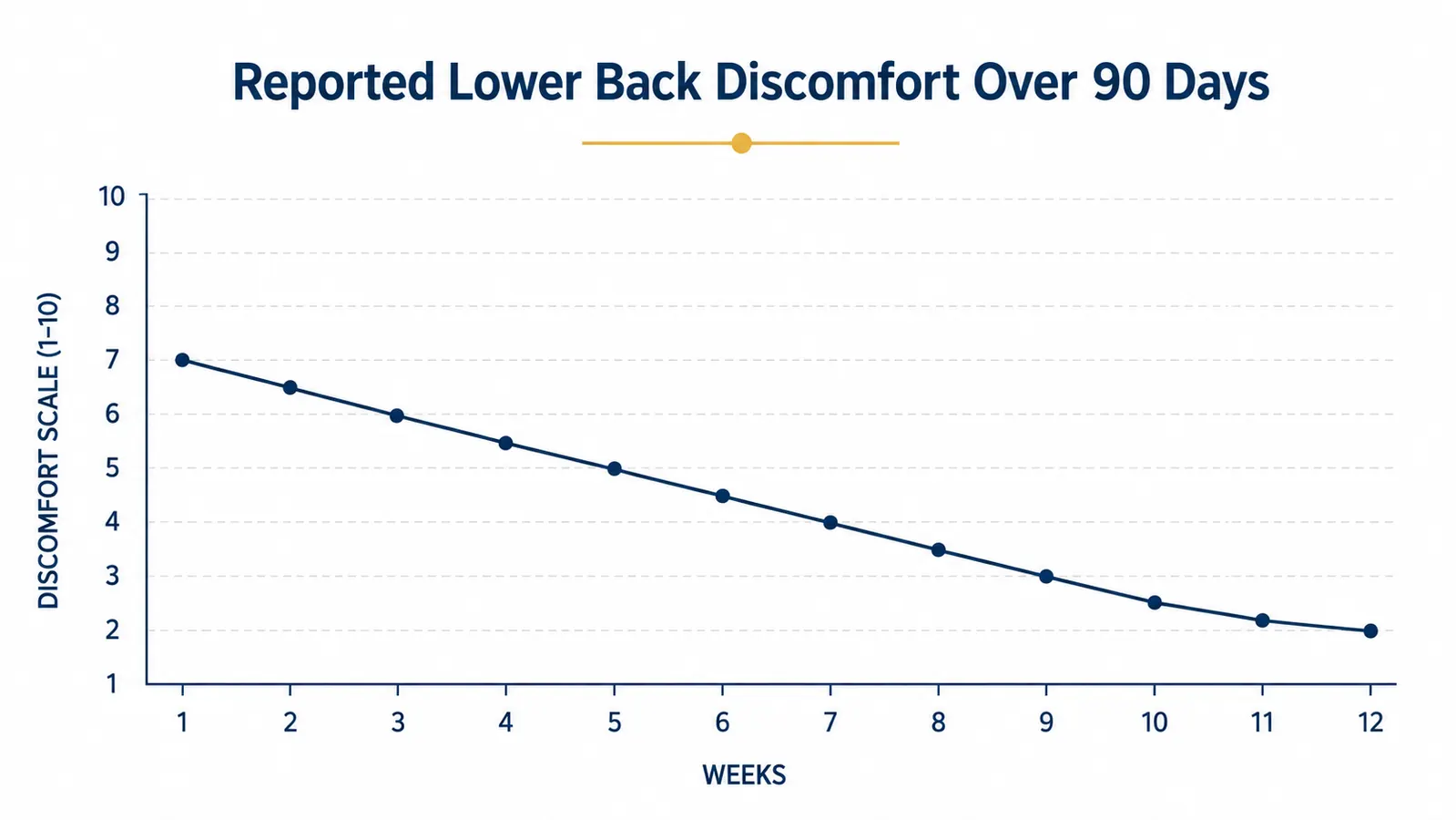
Before starting, I rated my lower back discomfort on a 1-10 scale each evening for two weeks in my old chair. Average was 6.8. I repeated the same daily rating throughout the 90-day test. By week 4, the average had dropped to 4.1. By week 12, I was averaging 2.3. That is a meaningful shift, not a placebo. I also tracked afternoon energy dips, which I loosely define as the 2 PM urge to lie down. Those became noticeably less frequent starting around week three.
The chair ships in a single large box. Assembly took me 38 minutes solo, which is longer than it should be because the instruction booklet uses only diagrams with no written steps. A friend who helped me unbox it said the same thing. That is the first real complaint. Once assembled, it sat solid with no wobble.
Lumbar Support: The Feature That Actually Moved the Needle
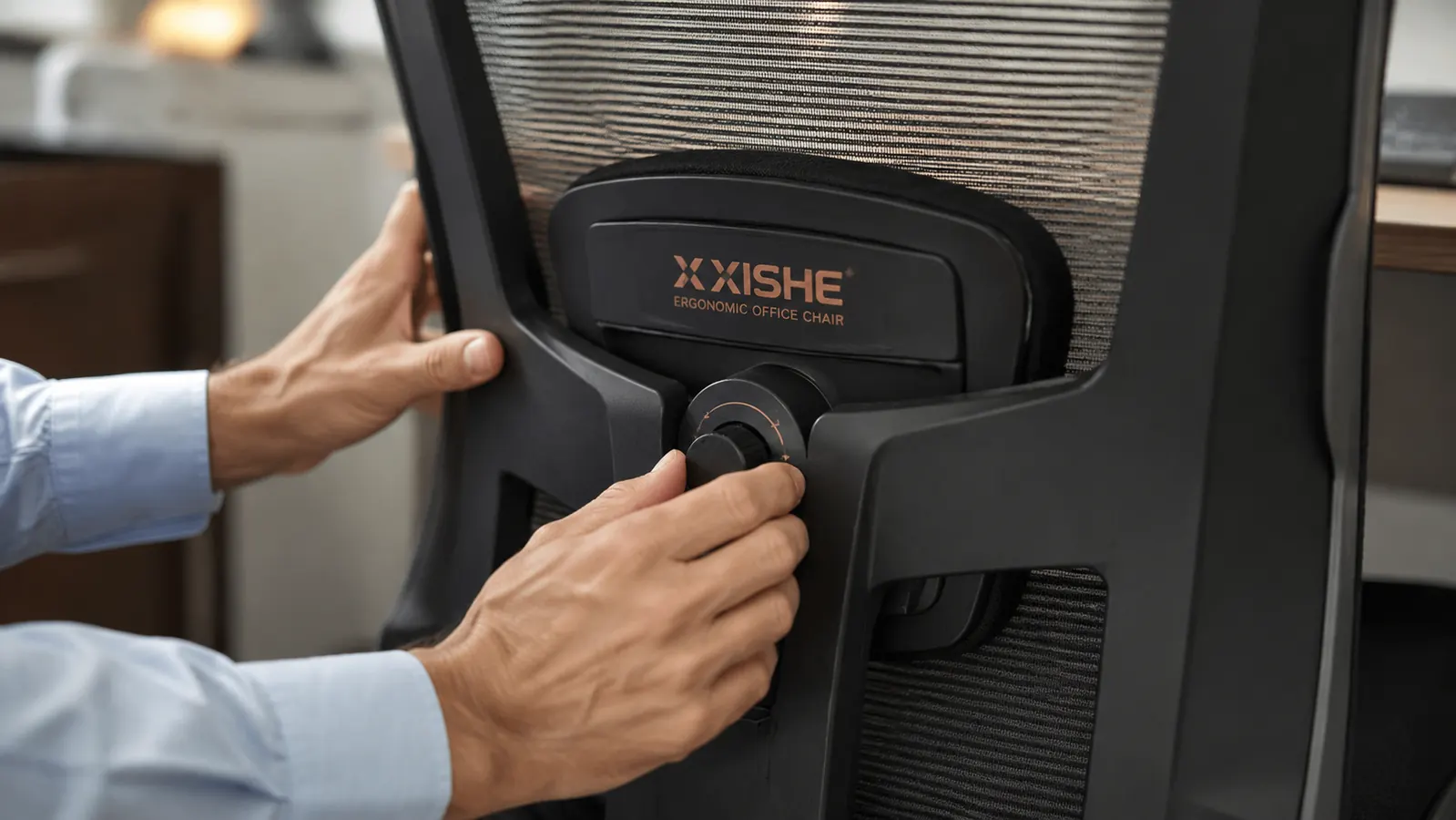
Most chairs at this price range offer lumbar support in the form of a fixed foam pad that sits in the wrong place for your specific spine and stays there. The X XISHE uses a built-in lumbar system that lets you adjust both height and depth using a knob on the back panel. I spent about 15 minutes on day one dialing it in correctly, which involved sitting upright, placing my hand behind the curve of my lower back, and adjusting until the pad contacted that curve without pushing me forward.
Once set, I did not touch it again for 90 days. That is a sign of good design. The adjustment held its position throughout the test period without drifting. I am 5 feet 11 inches and 195 pounds, and the lumbar pad landed exactly where I needed it. I asked a colleague who is 5 feet 6 and 145 pounds to sit in the chair for about an hour during a co-working session, and she said the lumbar felt correct for her frame too after a single quick adjustment. The range is generous.
One nuance: the lumbar support is most effective when you are actually sitting upright. If you slide into a reclined position, which you will on long calls when your attention wanders, the pad loses contact and you lose the benefit. That is not a flaw exclusive to this chair, but it is worth knowing.
Build Quality and Materials After Three Months of Daily Use
The chair uses a PU leather seat and armrests over a mesh back panel. After 90 days, the mesh back shows no sagging or distortion. The PU leather seat has developed a very faint surface texture change from compression, but there is no cracking, peeling, or material failure. I was honestly expecting some flaking at the armrest edges by month two based on past experience with cheaper PU products. That has not happened yet, though I will note that this is not genuine leather and its longevity over two or three years is genuinely unknown from my testing window.
The gas lift cylinder operates smoothly. The five-point base with dual-wheel casters rolls well on both hardwood floors and a thin polypropylene desk mat. No floor scratching. The height range spans roughly 17.7 to 21.5 inches from the seat surface to the floor, which accommodates a wide range of desk heights. My desk sits at 29 inches and the chair works correctly at the midpoint of its adjustment range for my frame.
By week 12 my average evening back discomfort rating had dropped from 6.8 to 2.3. That is not a coincidence and it is not a placebo. The lumbar adjustment and seat depth are doing real work.
The recline function goes back to roughly 135 degrees and holds with a tilt-lock mechanism. I use the recline for long phone calls where I am listening more than talking. It is not a full zero-gravity recline and if you want that function, you are shopping a different category of chair. For upright and slight-recline work use, it is sufficient.
Armrests, Seat Depth, and the Details That Matter for Long Days
The 2D adjustable armrests move up and down only. They do not pivot inward or rotate. This is a limitation if you type with a keyboard that sits flat and close to your body, since the armrests may not align well with your forearm angle. I tested this. For standard typing posture with a keyboard at desk height, the armrests are fine. For typing on a laptop in my lap, they get in the way and I fold them down. That adjustment takes about three seconds and I do it without thinking now.
The seat depth is fixed. That matters if you have shorter legs, because a fixed-depth seat may push the front edge into the back of your knees. At nearly six feet tall, this is not an issue for me. Someone with a 27-inch or shorter inseam may feel some pressure at the knee crease after extended sitting. If that is your situation, a seat slider would be a meaningful upgrade to look for in a next-tier chair.
The headrest is included and height-adjustable. I do not use it during active work sessions. I use it exclusively during reclined phone calls. It is adequately padded and the neck angle it creates is comfortable for that specific use case. It does not get in the way when I am sitting upright, which is the real test of a headrest on a work chair.
Performance Over Time: Does It Hold Up Past the Honeymoon Period?
Week one in any new chair feels better than week one in the old chair, so I deliberately waited until week four before drawing any conclusions. The meaningful test is whether the structural elements that create support are still calibrated correctly at 90 days or whether they have compressed, shifted, or loosened. My assessment: the lumbar adjustment, the seat foam density, and the back recline mechanism all feel functionally identical to day one. Nothing has loosened. Nothing has changed shape enough to affect function.
The one component I will monitor going forward is the seat pan foam. It has not collapsed, but PU-covered foam in a chair at this price point typically shows meaningful compression at the 12-to-18-month mark. I cannot report on that yet. What I can report is that at 90 days, it has not happened. If that changes, I will update this review.
What I Liked
- Lumbar support is adjustable in height and depth, not a fixed pad, and it holds its position without drifting
- Rating and review volume (4.5 stars, 3,000-plus reviews) holds up against lived experience
- Height range is wide enough for most standard desk setups without needing an adapter or footrest
- Mesh back prevents heat buildup during long sessions compared to full PU chairs
- Five-point caster base is stable and moves smoothly without scratching hardwood floors
- Current price point delivers more functional ergonomics than chairs at twice the cost from office supply stores
Where It Falls Short
- Assembly instructions are diagrams only with no written steps, which adds 15-plus minutes for most buyers
- PU leather seat longevity beyond 12 to 18 months is unknown and will be a real factor in value calculation
- Armrests adjust only up and down, with no inward pivot or rotation, which limits keyboard angle options for some setups
- Fixed seat depth is a concern for shorter-legged users who may feel front-edge pressure at the knee crease
- No seat slider means you cannot shorten the effective depth to accommodate a smaller frame

Who This Is For
This chair is built for the founder or professional who is working real hours at a real desk and needs a seat that addresses lumbar support without requiring a premium investment. If you are putting in six to ten hours a day, dealing with lower back tightness by afternoon, and sitting in a basic task chair or a dining room castoff, this is a direct and affordable upgrade that will produce a measurable change in how you feel at 5 PM. The adjustable lumbar alone justifies the switch from a non-adjustable chair. Pair it with the guidance in our article on ergonomic chair vs standing desk to decide whether you also want a height-adjustable desk alongside it.
It also works well if you share a home office with a partner or team member who has a different body type. The lumbar range covers most adult frames without needing to swap chairs.
Who Should Skip It
If you are under 5 feet 4 with shorter legs, the fixed seat depth may create discomfort over long sessions and you should specifically look for a chair with a seat slider. If your work setup requires an armrest that rotates inward (common with ergonomic keyboard trays at very low angles), the 2D-only armrests will frustrate you. If you are managing an active back injury under a physical therapist's direction, get the PT's recommendation on lumbar curve specs before buying any chair online. And if you are planning to sit in this chair for three or more years and are comparing cost-per-year, the PU seat durability question is legitimate and a full-mesh chair in the same price bracket may serve you better long-term. Read our breakdown of why an ergonomic chair reduces back pain for long work days to understand what specific features to prioritize for your situation before deciding.
If your back is still paying for your old chair, the tab is going up every day you wait.
The X XISHE ergonomic office chair is available on Amazon. Check today's price and see if it fits your setup before deciding.
Amazon Check Today's Price on Amazon →